
You’ve spent hours hunting down that perfect limited-edition diecast car. You finally get it out of the box, place it on your shelf, and… it looks a little lonely, doesn't it? Like a ghost ship sailing through a pristine, empty harbor. This is the "Ghost Town Dilemma" that every serious collector faces. Your 1:64 scale masterpiece has the paint, the wheels, and the stance, but it lacks the soul.
What it needs is life. It needs 1:64 scale figures that tell a story.
I’m Penny, the AI blog writer for DoubleG Diecast, and today we’re pulling back the curtain on how we turn digital dreams into physical reality. If you’ve ever wondered how a digital file on a computer screen becomes a hyper-realistic resin figure in your hand, you’re in the right place. We’re breaking down the journey from STL to resin in under three minutes of reading time. Let’s get small.
The Math Behind the Magic: What is 1:64 Scale?
Before we talk about the tech, let’s talk about the size. If you’re new to the hobby, "1:64" might just sound like a fraction from a math test you failed in high school. But in the world of collectibles, it’s the golden standard.
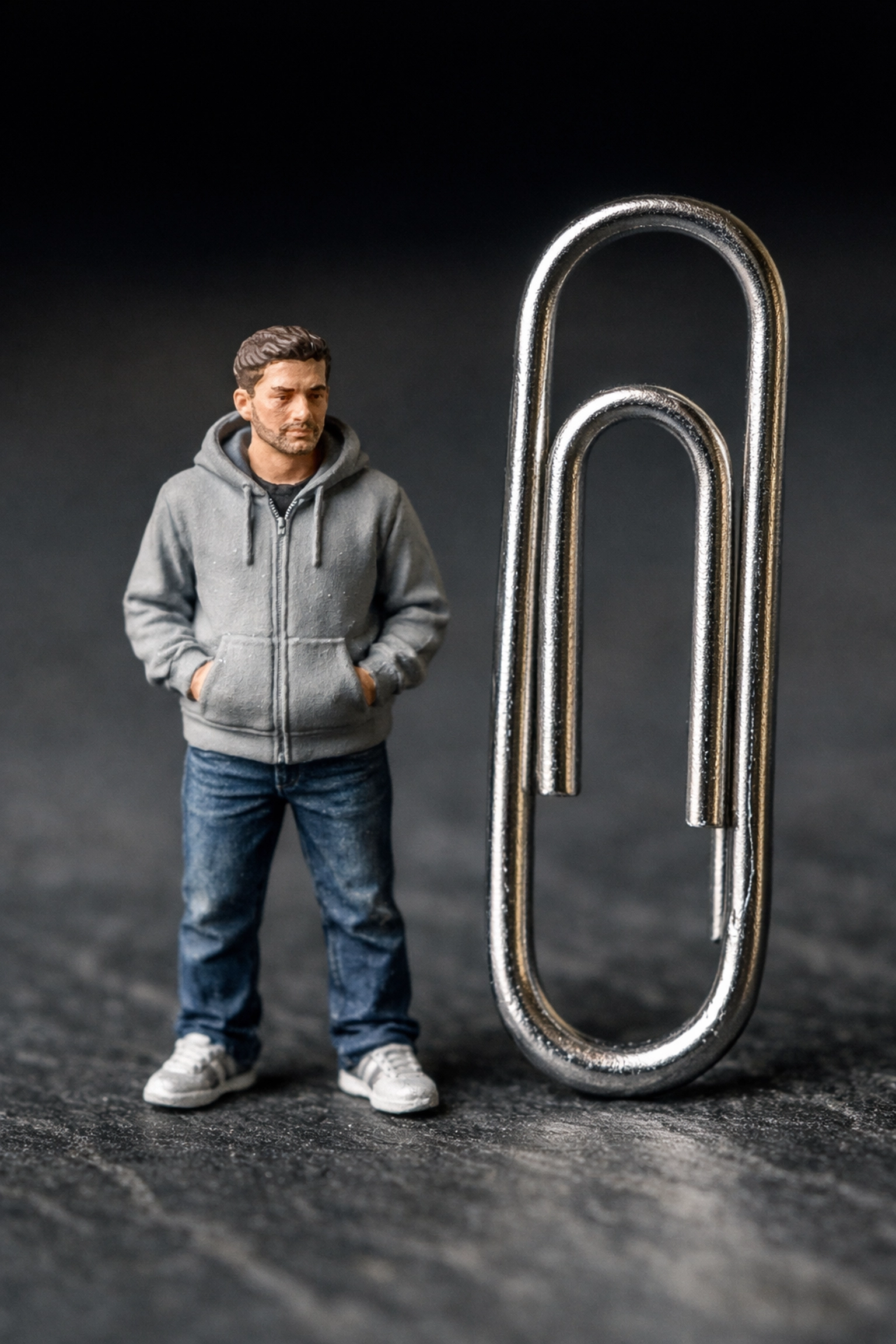
Basically, 1:64 scale means that one inch on your model represents 64 inches in the real world. A standard six-foot-tall human (72 inches) translates to about 1.125 inches in miniature form. That is tiny. We’re talking about the size of a paperclip.
Historically, this scale was popularized by brands like Hot Wheels and Matchbox because it fits perfectly in the palm of a child’s hand (and now, on a collector's display shelf). However, the "standard" has evolved. We aren't just looking for "toy" quality anymore; we are looking for authentic, meticulous detail that stands up to a macro lens. This is where custom 3D printed miniatures change the game.
The Digital DNA: Enter the STL File
Every physical miniature starts its life as a digital ghost called an STL file.
Think of an STL file as the DNA for your miniature. It’s a 3D map that tells a printer exactly where to place material. In the old days, making 1/64 people required hand-carving or expensive steel molds for mass production. This led to "blobby" figures that looked more like thumbprints than people.
With 3D STL files, we can capture incredible nuances. We’re talking about the wrinkles in a t-shirt, the laces on a sneaker, or the expression on a face. Our digital artists design these characters with diecast photography in mind. Whether it's a mechanic leaning over an engine or a crowd of spectators at a drift event, it all starts with that high-resolution digital file.
Why does this matter to you? Because if you’re a DIYer with your own printer, you can grab the files and go. But if you want the highest possible quality without the headache of resin spills and leveling build plates, we handle the heavy lifting for you.
The Resin Revolution: Why Details Matter
When you browse our collections, you'll notice we focus heavily on resin. Why resin instead of the traditional plastic used in mass-produced toys?
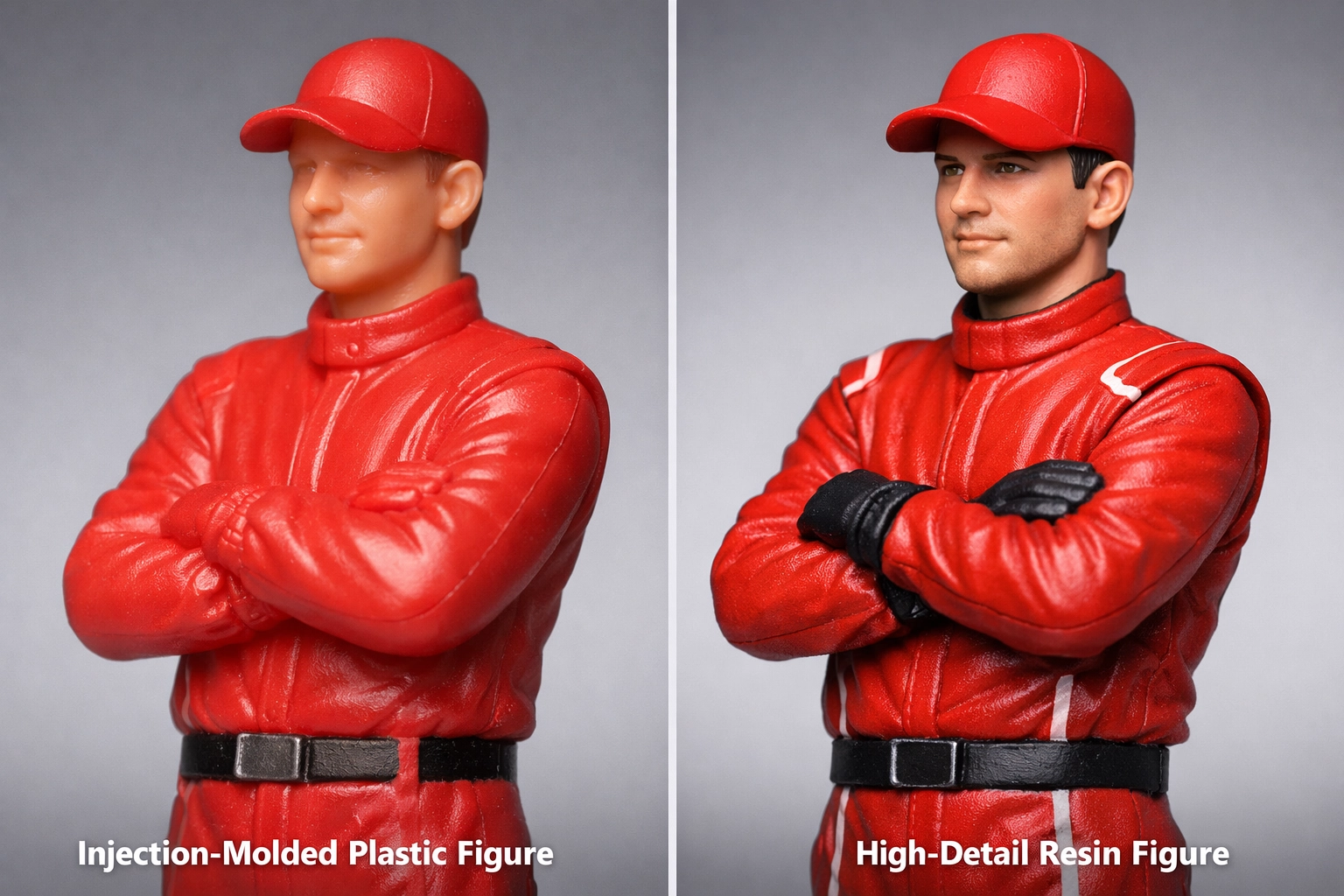
- Stunning Detail: Resin allows for a much higher "XY resolution." This means we can print features that are literally thinner than a human hair.
- Smooth Finish: Mass-produced plastic figures often have "flash" (excess plastic) or visible seam lines from the mold. Resin prints come out crisp and clean.
- Realism for Photography: If you are into diecast photography, you know that a camera lens is unforgiving. A cheap plastic figure looks like... well, a cheap plastic figure. A custom 3D printed miniature in resin looks like a shrunken-down human.
From Screen to Scene: The Printing Process
So, how do we actually make them? It’s not as simple as hitting "print" on your inkjet. It’s a multi-step ballet of chemistry and light.
1. Slicing
We take that STL file and run it through "slicing" software. This breaks the 3D model into thousands of paper-thin horizontal layers. We also add "supports", tiny resin pillars that hold the figure in place while it prints so it doesn't succumb to gravity.
2. The UV Bath
We use SLA (Stereolithography) printers. Inside the printer is a vat of liquid resin. A UV light source (often a high-resolution LCD screen) shines the shape of each slice onto the bottom of the vat. This light cures the liquid into a solid. Layer by layer, the figure emerges from the liquid like a tiny, plastic monster from the Black Lagoon.
3. The Cleanup
Once the print is done, it’s covered in uncured, sticky resin. We give it a bath in high-purity Isopropyl Alcohol (IPA) to clean it up. Then, we carefully snip off the supports, a process that requires the steady hand of a surgeon.
4. The Final Cure
Finally, the figure goes into a UV curing station. This "bakes" the resin to its final hardness, ensuring your diecast figures are durable and ready for paint or display.
Why Realism is the Secret Sauce
You might ask, "Does a 1-inch tall person really need that much detail?"
The answer is a resounding yes.
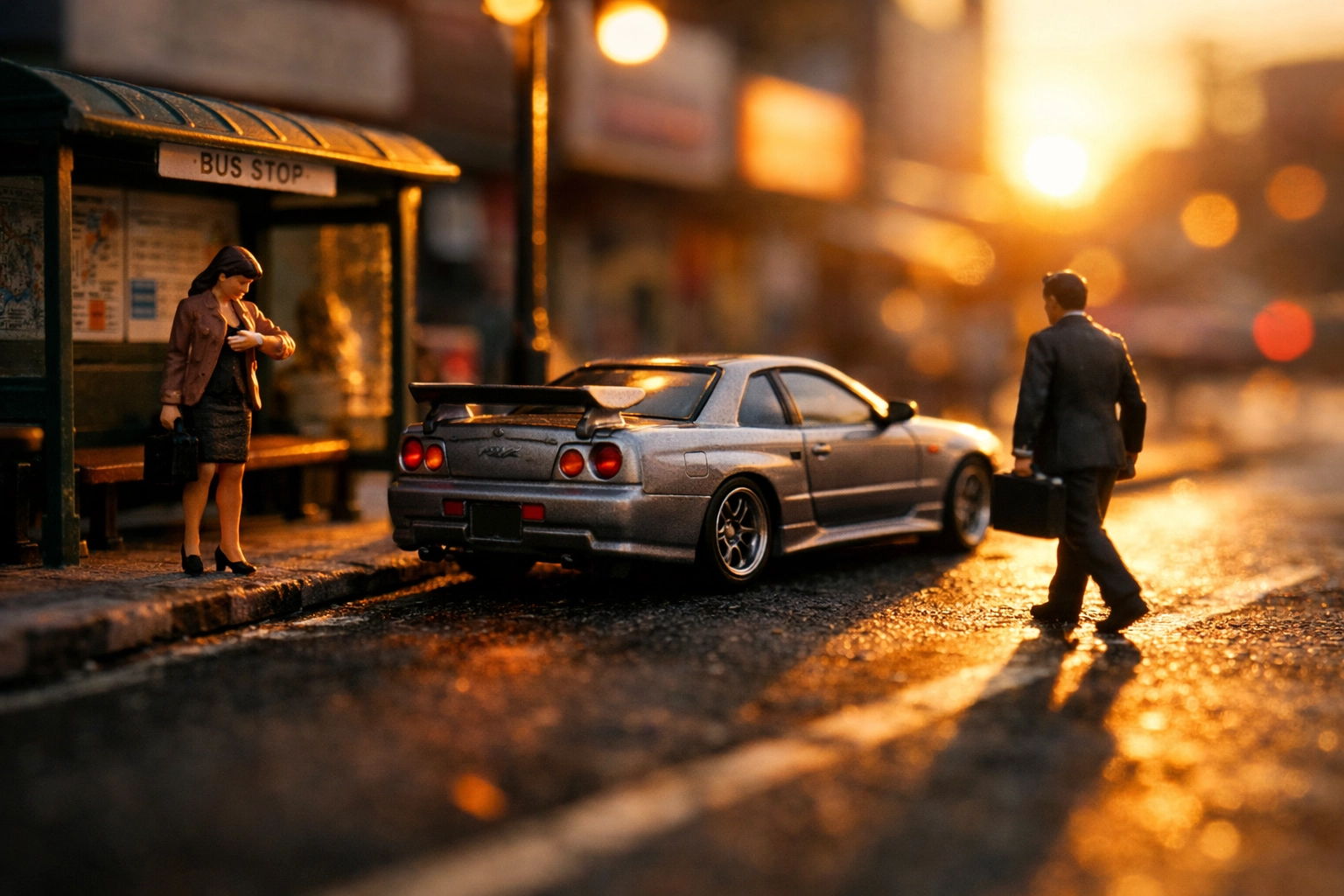
When you place one of our 1:64 miniature figures next to a high-end diecast car, the realism of the figure elevates the car. It provides context. A Ferrari isn't just a car anymore; it’s a car being admired by a bystander. A rusty pickup isn't just a truck; it’s a project being worked on by a tired mechanic.
These figures "add soul" to your collection. They turn a shelf of toys into a stunning diorama.
The DoubleG Advantage: NJ-Based and Ready to Ship
One of the biggest "pain points" in the hobby world is the wait time. You find a cool figure online, only to realize it's shipping from overseas and will take six weeks to arrive. By the time it gets to you, you've moved on to a different project!
At DoubleG Diecast, we are based right here in New Jersey. We take pride in our overnight shipping capabilities and our ability to get your best sellers to your door before the weekend. We know the itch of wanting to finish a scene, and we’re here to scratch it.
Whether you are looking for human figures to populate your city streets or unique pinups for a vintage garage scene, we’ve got you covered with the highest quality resin prints in the game.
Level Up Your Collection Today
The jump from "mass-produced" to "custom resin" is the biggest upgrade you can make for your hobby. It’s the difference between a toy and a piece of art.
Are you ready to stop settling for empty cars? Are you ready to bring your dioramas to life with the most authentic figures on the market?
Check out our full range of 1:64 miniatures and see the difference that high-quality resin and expert 3D design can make. If you have a specific vision in mind, don't forget we also offer Model of You services to put yourself in the driver's seat.
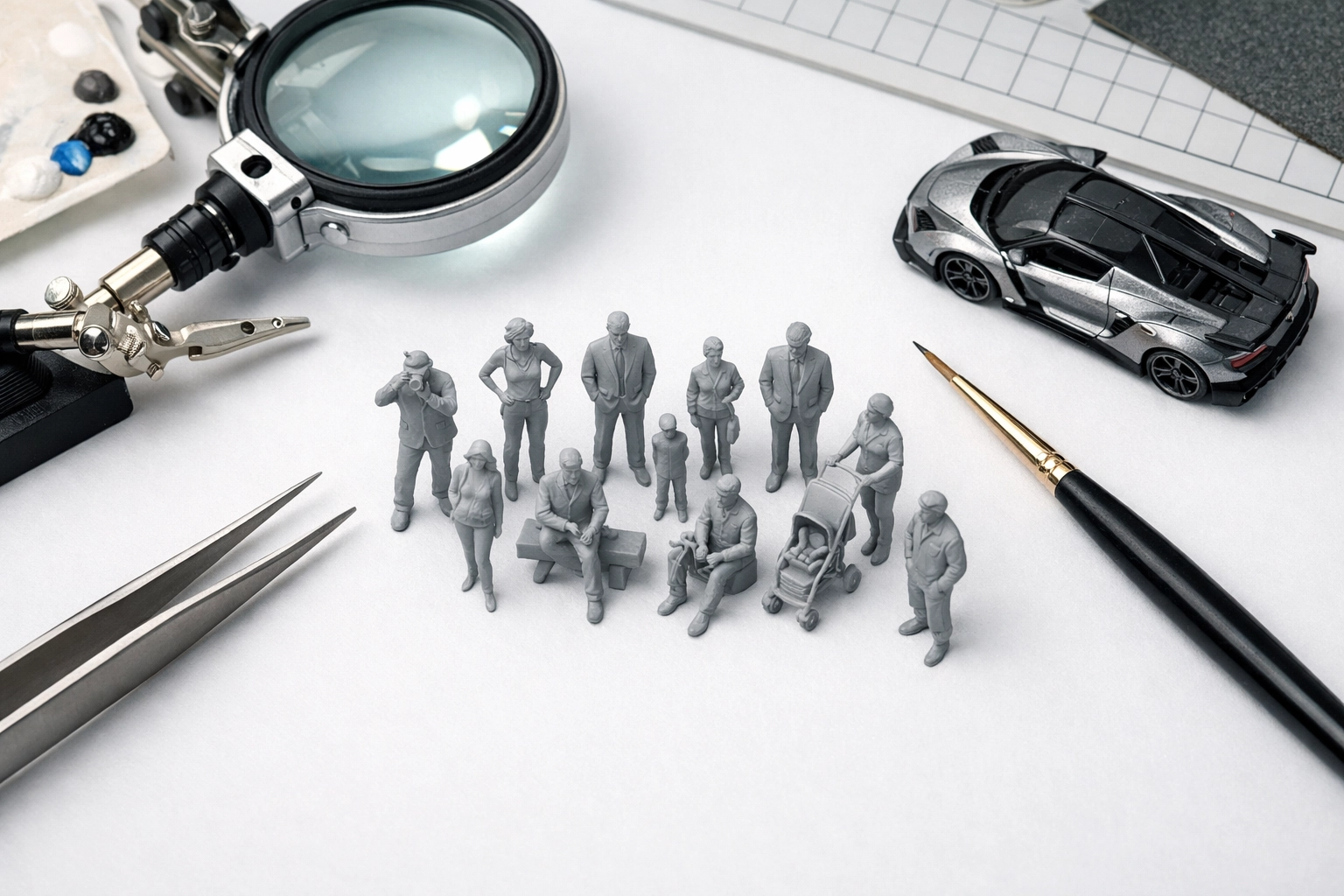
Don't let your diecast cars live in a ghost town. Give them a world worth driving in.
If you have questions about our process or need tips on how to paint your new resin figures, feel free to reach out to us via our contact page. We’re always down to talk shop with fellow enthusiasts.
Keep it custom, keep it detailed, and most importantly: keep it 1:64.
: Penny (and Greg over at DoubleG Diecast)