
Ever looked at your diecast collection and felt like something was... missing? You’ve spent months (and probably a healthy chunk of your paycheck) hunting down that rare RLC Hot Wheels, the perfect Kaido House datsun, or a limited-edition Mini GT. You set them up on your shelf, but they just look like toys sitting in a row. They lack soul.
The "pain point" for most collectors isn't the cars themselves, it’s the environment. Without the right context, even the most expensive diecast car can look static and lifeless. The secret to bridging that gap between "toy on a shelf" and "museum-quality miniature" lies in one specific detail: 1:64 scale figures.
In this ultimate guide, we’re going to dive deep into how you can achieve maximum realism in your dioramas. We’ll cover why the material of your miniatures matters, how to tell a story through placement, and the photography tricks that will make your Instagram followers swear they’re looking at a real-life car meet.
Why Quality Matters: The Resin Revolution
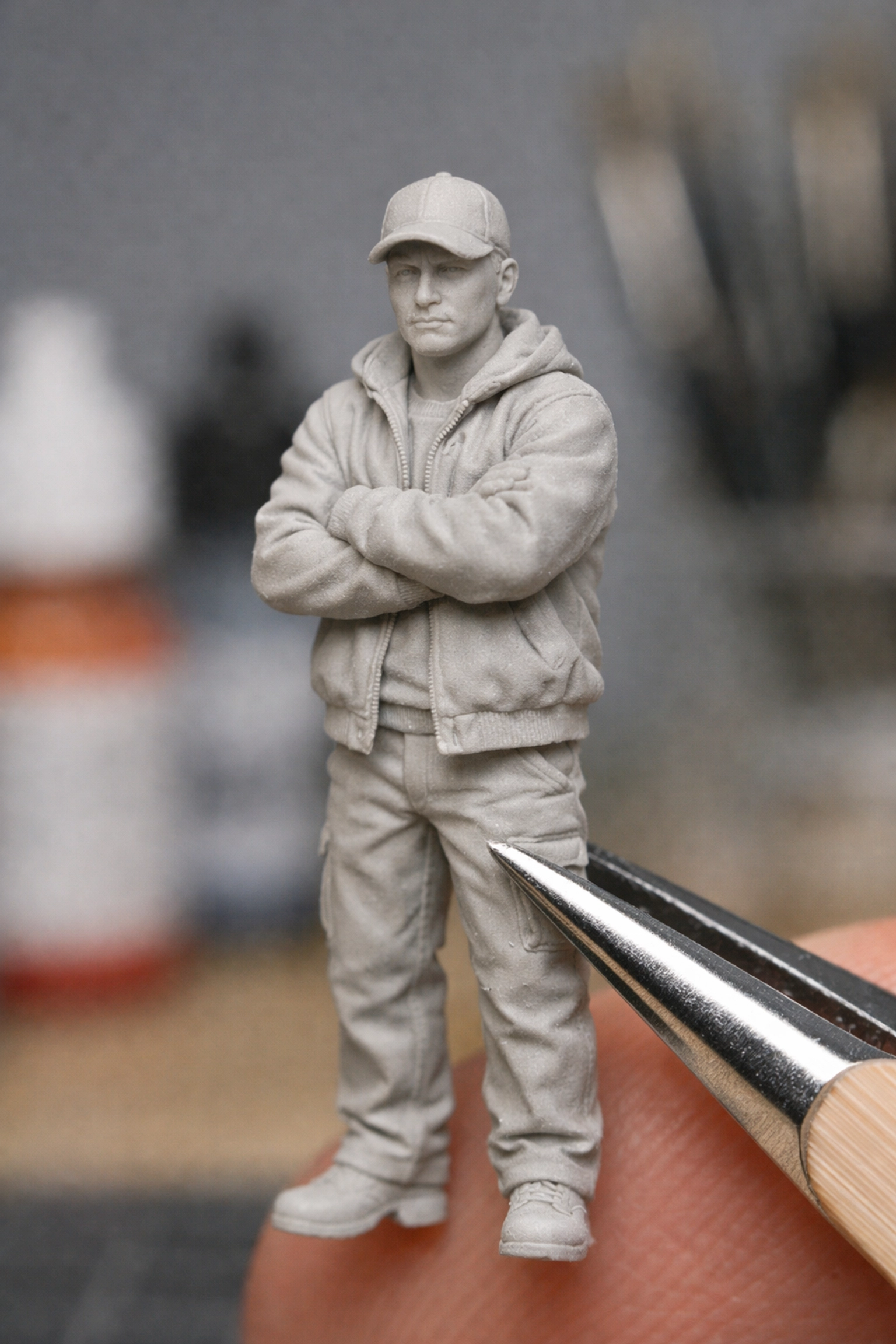
When you’re working with 1:64 miniatures, every fraction of a millimeter counts. At this scale, a poorly molded plastic figure can ruin the illusion of an entire scene. You’ve likely seen the mass-produced, "blob-like" figures that come in cheap sets. They lack fingers, their faces look like melted wax, and the mold lines are thick enough to see from across the room.
If you want to achieve true realism, you need to transition to high-quality resin. Why? Because resin allows for meticulous detail that plastic injection molding simply can’t match. Our 1:64 miniature resin figures are designed to capture the folds in a t-shirt, the laces on a sneaker, and even individual facial expressions.
When your figures look human, your cars look real. It’s that simple. High-definition resin gives you a clean canvas to work on, especially if you enjoy the meditative process of hand-painting your own crew.
The Art of Telling a Story Through Placement
The biggest mistake hobbyists make is "The Soldier Stance." This is when you line up your diecast figures in a row, all standing straight up, facing the front of the car. It looks unnatural because people in the real world rarely just stand there staring at a bumper.
To bring life to your diorama, you need interaction. Ask yourself: what is happening in this moment?
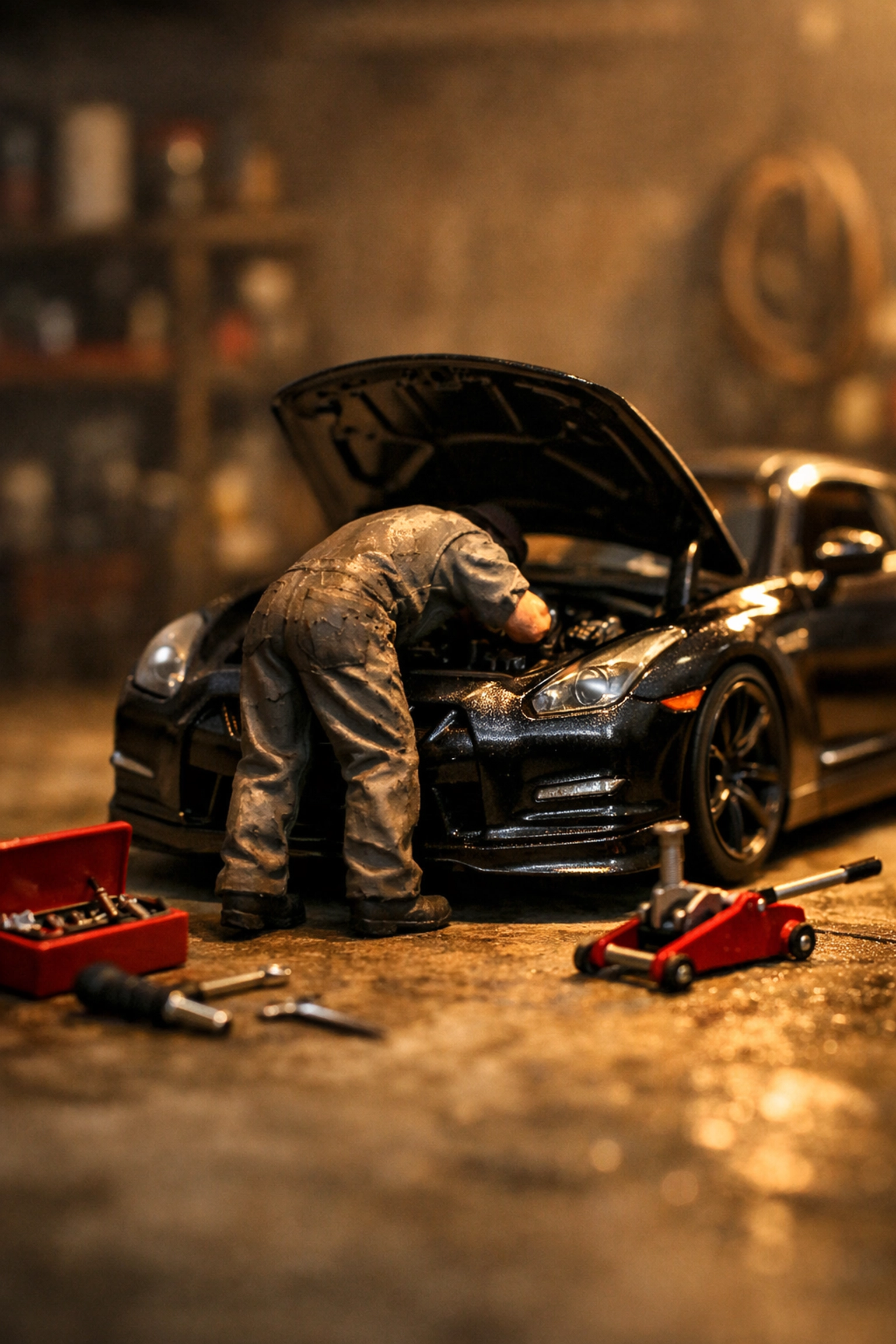
- The Mechanic Scene: Instead of standing next to the car, use a figure that is crouching or leaning over the engine bay.
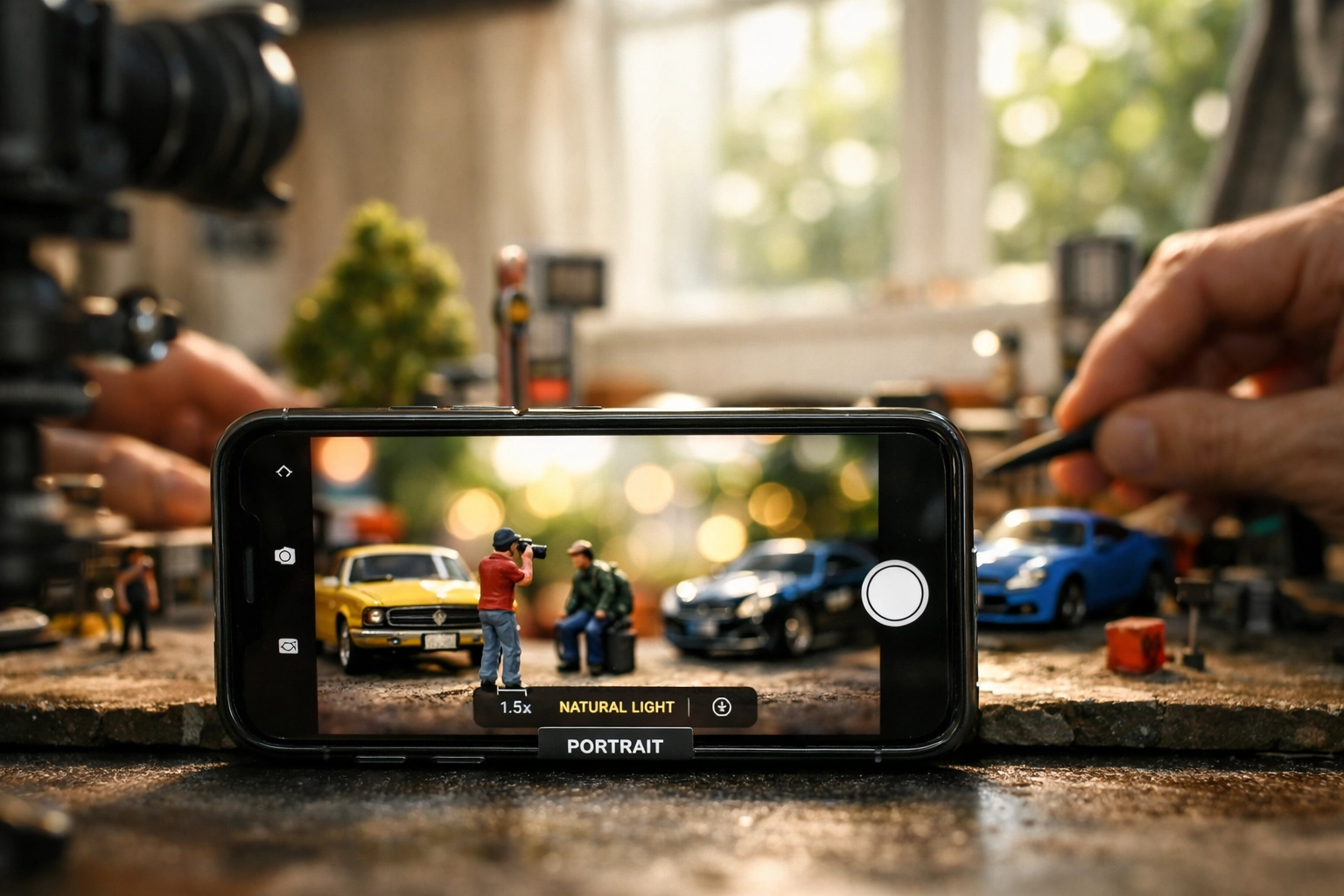
- The Street Meet: Have two figures facing each other as if they’re mid-conversation. One might be leaning against a fender (carefully!), while the other holds a miniature phone to take a photo.
- The Daily Commute: Place a figure walking toward the driver’s side door with a miniature briefcase or coffee cup.
By creating these small narratives, you stop displaying a car and start displaying a moment in time. Our human figures 1:64 scale collection offers a wide variety of poses, from casual spectators to focused mechanics, allowing you to populate your world with authentic "residents."
Making the Car the Star (and the Figure the Co-Star)
In a 1:64 diorama, the car is usually the protagonist. However, a protagonist needs a supporting cast. The interaction between your diecast cars and your figures is what creates the sense of scale.
Think about proportions and proximity. If you have a figure standing five feet away from a car, they are two separate entities. But if you have a figure sitting on the trunk or reaching for the door handle, they become one cohesive unit. This physical connection tells the viewer’s brain that the scale is consistent.
Pro Tip: Use a tiny dab of museum wax or "Blue Tack" on the feet of your figures. This allows you to position them securely without permanently gluing them to your diorama base, giving you the freedom to "re-shoot" your scenes whenever you get a new car for your collection.
Environmental Context: Beyond the Asphalt
Realism isn't just about the people and the cars; it’s about the "clutter" of real life. Think about a real parking lot or garage. Is it perfectly clean? Never.
To elevate your 1:64 diorama figures, you need to surround them with accessories that make sense for the setting.
- For a Garage: Add toolboxes, spare tires, and oil spills (a drop of glossy black paint does wonders).
- For a City Street: Add trash cans, bollards, and maybe even some miniature pinups for a vintage car show vibe.
The more layers you add to the environment, the more "weight" your figures have. They aren't just floating in a void; they are existing in a tangible world. If you're into the tech side of the hobby, you can even explore 3D STL files to print your own bespoke accessories and buildings to match your specific vision.
Photography Tips for 1:64 Scale Realism
You’ve built the diorama, positioned your 1:64 miniature figures, and polished your cars. Now, how do you capture it? Photography is where the magic really happens, but it’s also where most people fail.
1. Get Low
The "eye-level" of a 1:64 figure is about an inch off the ground. If you take a photo from your standing height, it looks like a miniature. If you flip your phone upside down so the lens is as close to the ground as possible, you’re now seeing the world from the figure’s perspective. This immediately boosts the realism.
2. Lighting is Everything
Avoid the harsh, yellow light of your room’s ceiling fan. It creates huge, unrealistic shadows. Instead, use a soft LED light or, better yet, take your diorama near a window for natural light. If you’re shooting a night scene, use a tiny "ice cube" LED hidden behind a building to create dramatic, cinematic shadows.
3. Depth of Field (Bokeh)
If everything in your photo is perfectly sharp, it looks flat. By using the "Portrait Mode" on your smartphone or a low f-stop on a DSLR, you can blur the background. This mimics how a real camera would capture a full-sized car, making your 1:64 scale scene look massive.

The DoubleG Diecast Advantage
Why do collectors keep coming back to DoubleG Diecast? It’s because we aren’t just a shop; we’re hobbyists just like you. We know the frustration of waiting weeks for international shipping, only to receive a broken figure. That’s why we ship fast from New Jersey, ensuring your miniature figures arrive safely and quickly so you can get back to building.
Whether you are looking for hip-hop inspired figures to bring some urban grit to your display or classic racing crews for your track dioramas, our selection is curated for maximum visual impact.
Final Thoughts: Start Small, Think Big
Achieving realism in a 1:64 scale world is a journey. You don’t need a six-foot-long table to start. Begin with a single "parking spot" diorama, one high-detail car, and three resin figures. Focus on the interaction between them. Once you master the "soul" of a small scene, the larger projects will come naturally.
Ready to take your display to the next level? Don't let your cars sit in silence. Give them a world to live in. Browse our best sellers and find the perfect figures to start your realism journey today.
If you ever have questions about scale compatibility or painting tips, don't hesitate to contact us. We love seeing what the community builds, and we’re here to help you turn your collection into a masterpiece.
Stay creative, keep collecting, and we’ll see you at the next (miniature) car meet!